

What are the Five Conditions?
- Shared Vision
- Quality Materials
- Professional Learning
- Empowered People
- Data for Impact
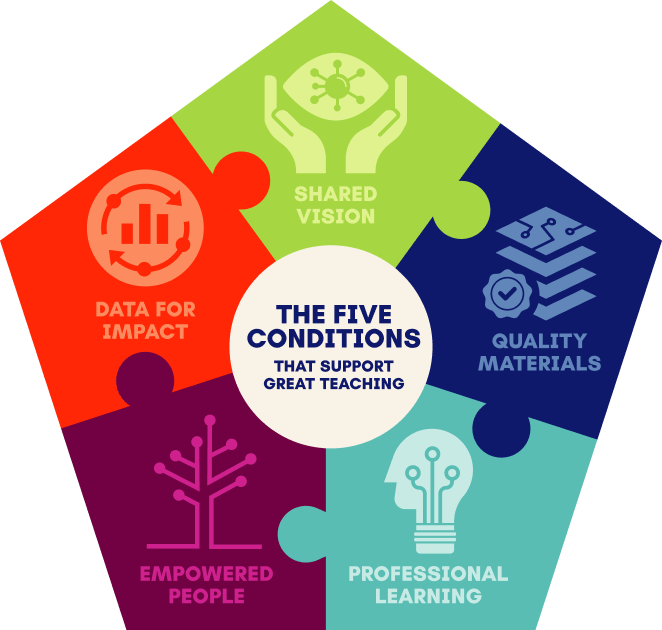
Defining the Five Conditions

1. Shared Vision
A clearly defined and widely communicated understanding of what great teaching looks, sounds, and feels like in a classroom.
Why it matters
It provides a common language and set of expectations that guide decisions, training, and classroom practice.
What it looks like
Districts engage stakeholders in co-creating a vision for instruction, communicate it consistently, and use it to guide policy, professional learning, and daily decision-making.
2. Quality Materials
Why it matters
They give teachers the foundation to deliver consistent, grade-level learning without having to create or piece together materials on their own.
What it looks like
Districts adopt and implement rigorous, standards-aligned curricula and ensure that both assignments and assessments are aligned to grade-level expectations.

3. Professional Learning
Why it matters
Professional learning is the bridge between vision and classroom practice. One-time workshops are rarely effective; learning must be content-focused, sustained, and connected to teachers’ daily work.
What it looks like
Teachers regularly engage in collaborative, practice-based learning with coaching and feedback. Leaders create structures and time that make continuous learning part of the school day.

4. Empowered People
Why it matters
Empowered people at every level create strong school cultures and expand great teaching beyond individual classrooms.
What it looks like
Leaders model instructional priorities, recognize and support teacher leaders, and create opportunities for student voice and ownership in the learning process.
5. Data for Impact
Why it matters
Educators need timely, relevant data to identify student learning opportunities, adjust instruction, and allocate resources effectively.
What it looks like
Districts develop systems that make data accessible, useful, and part of everyday practice to support teachers and leaders in making informed decisions to improve student outcomes.