



• There are no suggestions because the search field is empty.
Program

Strengthening Early Math Instruction

Focus K-3 Math

AMERICANED_CAPCITY_137
Impact Florida’s K–3 Focus Cadre helps districts build the systems, leadership, and classroom practices that improve early mathematics so more students develop the foundational skills that set them up for long-term success.
About the K–3 Focus Cadre

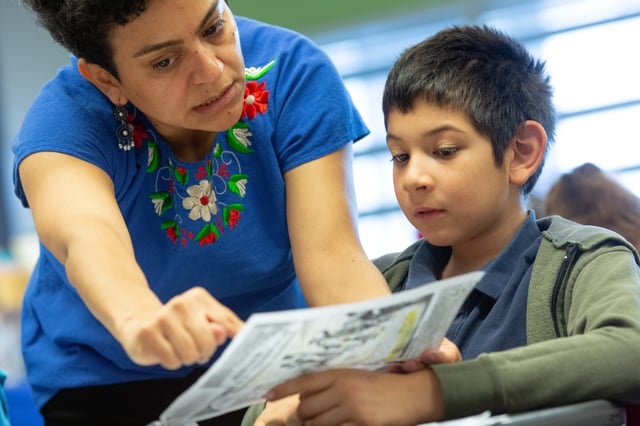
Launched in 2025 as the next iteration of our K–9 Focus cadre, the K–3 Focus Cadre supports districts to plan, prototype, and scale improvements in early math instruction. Teams receive customized coaching, take part in role-alike collaboration, conduct site visits and classroom observations, and use real-time data to guide decisions.

Cadre at a Glance

  • Launched in 2025
  • Participating districts include two large, urban districts; one medium, suburban district; and one small, rural district. Each district brings a unique context and set of schools to the initiative, ranging from urban to rural and from high-need to high-performing.
  • Cross-functional district teams that include principals, content experts, and leaders from multiple departments
  • A structured process to strengthen K–3 math systems, professional learning, materials use, and data routines

Why it Matters

Districts in our inaugural Focus cadre identified foundational skill gaps in the earliest grades as a major barrier to later math success, which is why this cadre begins where learning begins. Strengthening K–3 math raises the quality of daily instruction and builds the knowledge students need for later milestones.

Program Design

The K–3 Focus Cadre uses continuous improvement approach with short learning cycles so teams move from planning to practice and learn quickly from evidence.

Phase 1

Discover and Design

Collect and analyze evidence such as classroom observations, student work, and empathy interviews with teachers, students, and families. Define a shared vision for great K–3 math instruction and identify root causes that limit progress.

Phase 2

Prototype

Co-design small, targeted solutions that align to district priorities and the Five Conditions that Support Great Teaching.

Phase 3

Pilot and Monitor

Implement in select schools, use short learning cycles to check classroom practice and student learning, and refine supports based on what the data and stakeholders reveal.

Phase 4

Plan for Scale

Build the leadership routines, professional learning, and monitoring systems needed to expand what works across more schools and retire approaches with limited impact.

Impact

Districts in the cadre are working toward stronger systems for K–3 math to support great teaching in classrooms. Objectives include:

  • Clear district vision for early math, professional learning aligned to goals, and strong routines for continuous improvement.
  • Strengthened classroom practice in K–3 math, with high-quality tasks, alignment to benchmarks, and students engaged in mathematical thinking and reasoning.
  • Effective use of data to design, monitor, and scale high-impact practices, along with leadership capacity that sustains improvements over time, even through transitions.
  • Field learning that reinforces these shifts, including the role of principals, cross-school learning walks, and prototype classrooms showing stronger alignment to district expectations and more effortful student learning.

Get Involved

Interested in learning more about strengthening math systems through continuous improvement? We’d love to hear from you!

Contact

Katelyn Devine
Director of Math Success
katelyn@impactfl.org